-1758177633.png)
To More Inquiry
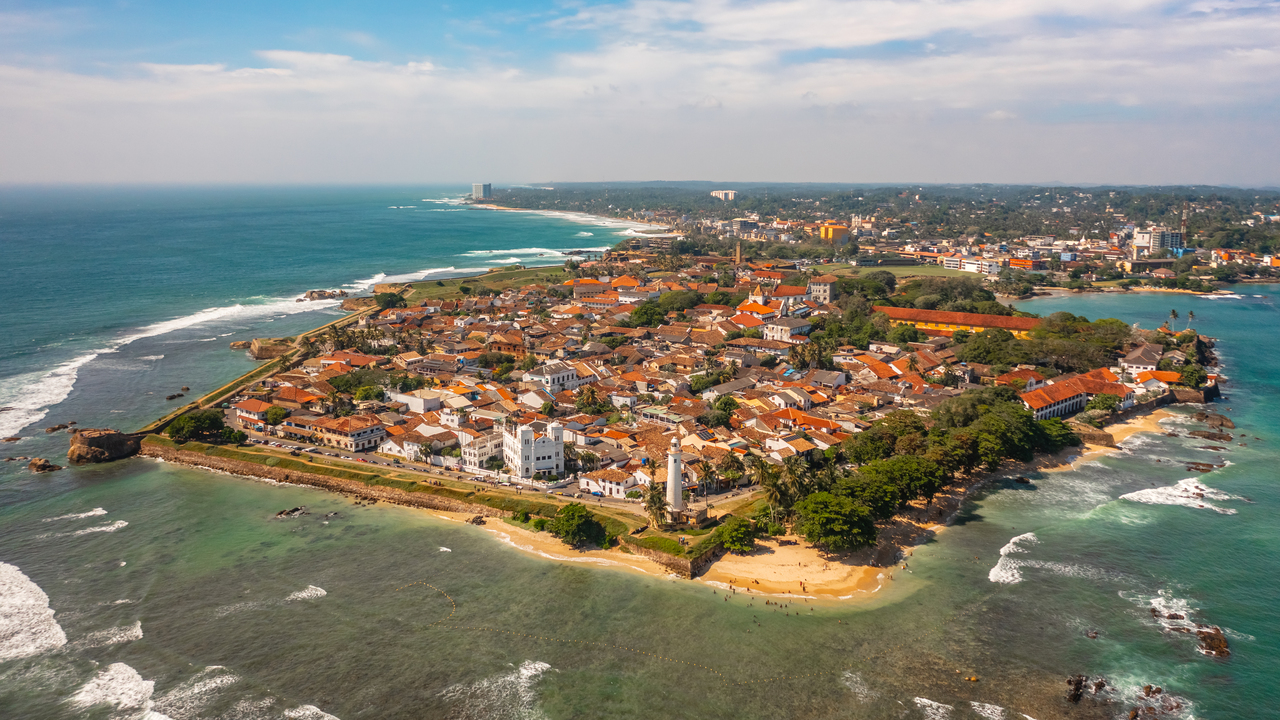
Galle has one of the richest histories of any city in Sri Lanka, tracing its heritage back over two millennia as a thriving seaport on ancient maritime trade routes. Considered a crossroads of civilizations, Galle saw some of the earliest encounters between South Asia and traders from Europe, Arabia, and the Far East, leaving behind a legacy of architecture, commerce, and cultural exchange.
Galle is one of Sri Lanka’s most historically significant cities, tracing its heritage back over two millennia as a thriving port on the island’s southern coast. Renowned for its strategic location along ancient maritime trade routes, Galle attracted traders from Greece, Rome, Arabia, China, and India. The city reached prominence during the 16th century with the arrival of the Portuguese, who fortified it, followed by the Dutch in the 17th century, who expanded Galle Fort into a major colonial stronghold. Today, the fort stands as a UNESCO World Heritage Site and a living monument of European-Asian cultural fusion.
Galle’s identity reflects its layered history of indigenous Sinhala traditions interwoven with Portuguese, Dutch, and British colonial legacies. The city is simultaneously a hub of Sri Lankan heritage, colonial architecture, and coastal trade. It is also a center for Buddhism and, historically, Christianity introduced by European settlers. Modern Galle blends its old-world charm with vibrant contemporary life, offering a mix of cultural festivals, arts, and tourism, while its fort and surrounding coastal areas remain central to its global recognition.
 (1)-1756646776.jpg)


 (1)-1756646776.jpg)